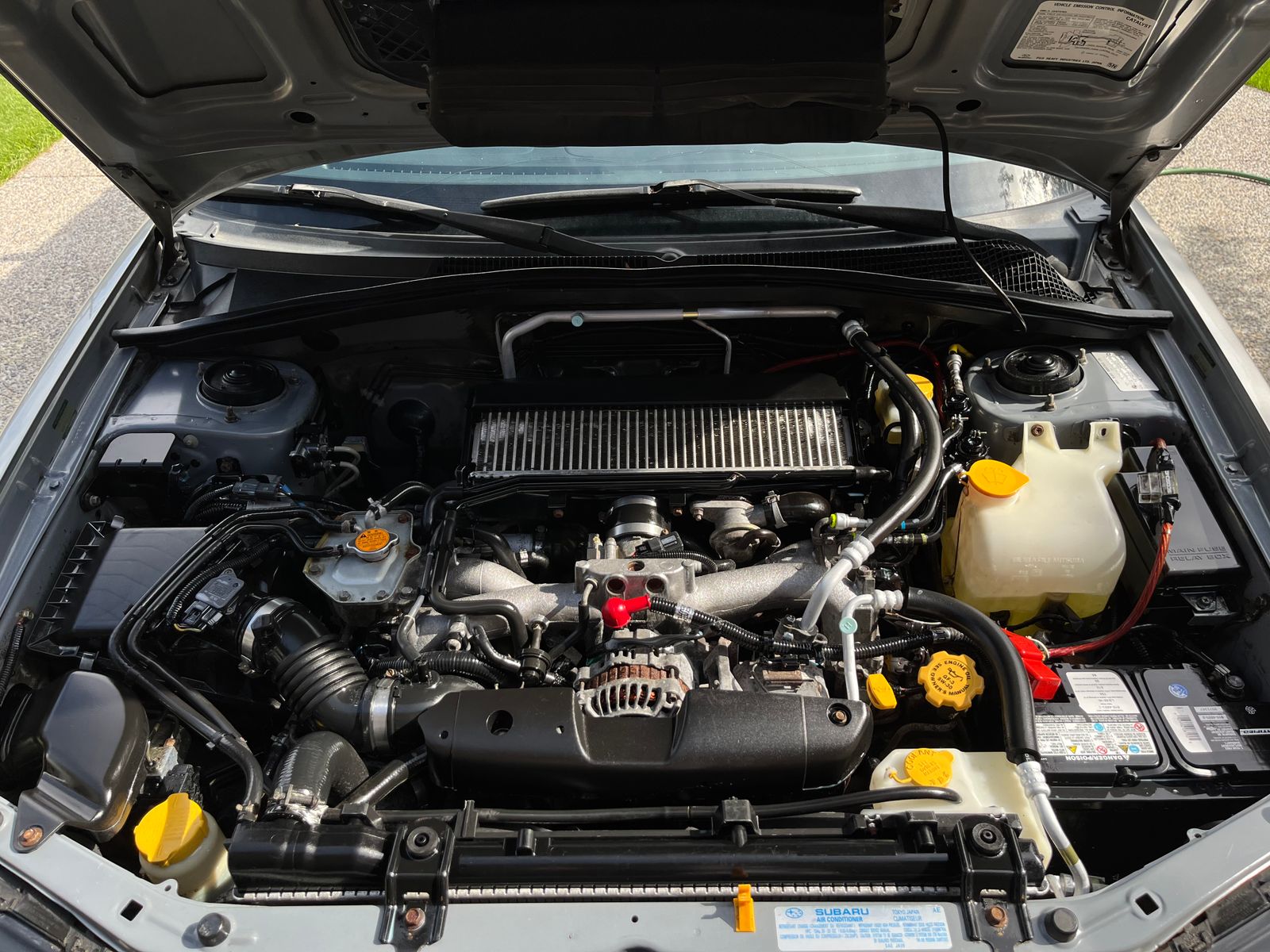

One morning, your car starts normally. A few weeks later, the battery hesitates, the tires feel less planted on a damp road, or the windshield fogs faster than usual during your commute.
That transition is easy to overlook in Southern California. Fall in El Segundo and Hermosa Beach may not bring snow or freezing temperatures, but it does bring cooler mornings, shorter daylight hours, marine moisture, fog, and the first meaningful rain after a long, dry summer. In Riverbank, cooler nights and changing road conditions can also expose problems that went unnoticed during warmer months.
A quick pre-fall inspection can help you catch those problems before they become a breakdown or a safety concern. Here are five checks worth making before the season turns.
Why a Pre-Fall Inspection Matters
Your vehicle has likely worked hard through summer heat, air-conditioning use, stop-and-go traffic, and long drives. Heat can accelerate battery wear, reduce tire life, and place extra stress on cooling-system components. Then, when cooler and wetter weather arrives, small weaknesses can become much more noticeable.
Think of a pre-fall inspection as a physical checkup for your vehicle. You are not waiting for a warning sign to become an emergency. You are looking for early symptoms while there is still time to make a sensible repair.
At Pittstop Auto Care, we can inspect these systems together as part of a broader automotive repair and maintenance service, helping you avoid the inconvenience of handling several problems separately.
1. Test the Battery and Charging System
Summer heat is often harder on a car battery than cooler weather. High temperatures can speed up internal chemical wear, while repeated short trips and heavy air-conditioning use can prevent the battery from fully recovering its charge.
Cooler fall mornings then place additional demand on a battery that may already be weakened. That is when a slow crank or a no-start situation can appear unexpectedly.
What to check
Look for:
- A slower-than-usual engine crank
- Dim headlights or interior lights
- Corrosion around the battery terminals
- A battery warning light on the dashboard
- Electrical accessories that flicker or behave inconsistently
- A battery that is several years old
The battery is only one part of the starting system. The alternator must recharge it while the engine runs, and the starter must use that stored energy to turn the engine over. Replacing the battery without checking the rest of the system may not solve the real problem.
A professional battery and charging-system test can measure whether the battery is holding a charge and whether the alternator is supplying the correct voltage. Pittstop’s battery and starting-system service can help identify the cause before you are stranded in a parking lot or at home before work.
2. Check Tire Pressure, Tread, and Wear
Tires are your vehicle’s contact with the road, and that contact becomes especially important when pavement is damp. Even a light South Bay rain can make roads feel slick after months of dry weather, when oil and debris have accumulated on the surface.
Cooler air also affects tire pressure. As temperatures drop, pressure can fall slightly. A tire that was already underinflated may become even less efficient and less stable.
Start with cold tire pressure
Check your tire pressure when the vehicle has been parked for several hours. Use the pressure listed on the driver’s door-jamb label or in the owner’s manual: not the maximum pressure printed on the tire sidewall.
Underinflated tires can:
- Reduce fuel economy
- Increase heat buildup
- Cause uneven shoulder wear
- Make steering feel less precise
- Increase the risk of tire damage
Do not rely only on the TPMS warning light. The system is useful, but it may not alert you until pressure is significantly low.
Look at tread and tire condition
Inspect the tread for uneven wear, bald areas, cracks, bulges, or objects lodged in the rubber. A simple tread-depth gauge gives you a more accurate reading than visual inspection alone. If the tread is very shallow, wet-weather traction can decline because the grooves have less ability to channel water away from the contact patch.
Uneven wear can also point to an alignment or suspension problem. If the inside or outside edge is wearing faster than the center, the issue may not be the tire itself. It could be a sign that your vehicle needs an alignment or suspension inspection.
If you need a tire inspection, repair, balancing, or replacement, a local tire shop serving Hermosa Beach and surrounding communities can evaluate the entire set rather than simply replacing one visibly worn tire.

3. Inspect the Brakes Before Wet-Weather Driving
Rain does not make a healthy brake system unsafe, but it can make existing brake problems harder to ignore. Wet roads require more careful stopping, and reduced tire grip leaves less room for worn pads, damaged rotors, or a soft pedal.
Pay attention to what you feel and hear during normal driving.
Warning signs include:
- Squealing or scraping when braking
- Grinding sounds
- Pulsation through the brake pedal or steering wheel
- A soft or spongy pedal
- The vehicle pulling to one side
- Longer stopping distances
- A brake warning light
Brake pads, rotors, calipers, brake lines, and fluid all contribute to stopping performance. A pad may still have material left while the rotor is damaged, or a soft pedal may indicate air or moisture in the hydraulic system.
Do not wait for grinding before scheduling an inspection. Grinding often means the friction material has worn away and metal components are contacting each other. What might have been a straightforward brake service can become a more extensive repair.
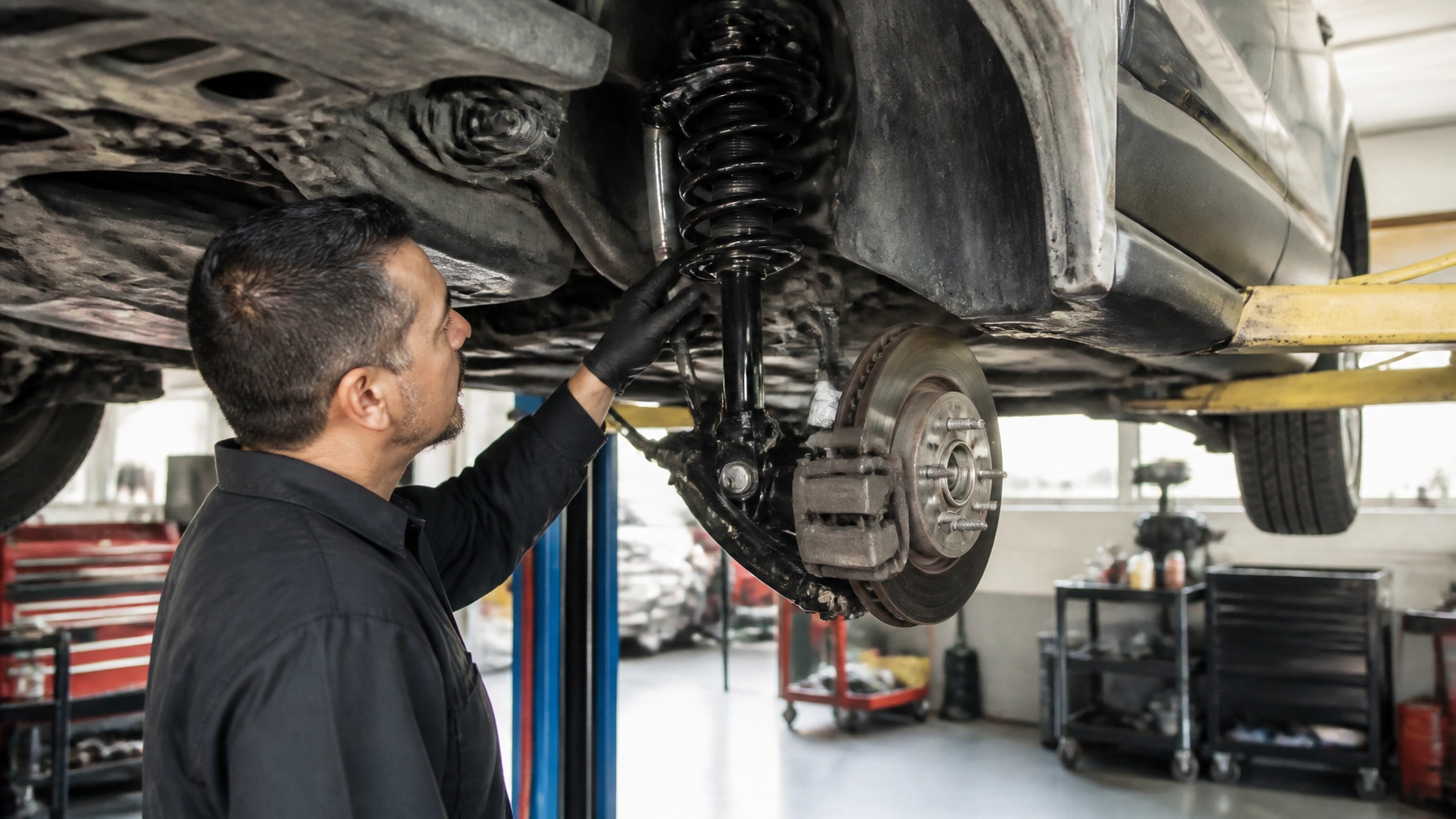
A complete brake, suspension, and alignment inspection can also reveal connected issues, such as worn suspension parts that allow uneven tire contact during braking.
4. Test Wipers, Washer Spray, and Exterior Lights
Visibility can change quickly during fall commutes. Coastal fog around El Segundo and Hermosa Beach, early-morning glare, light rain, and shorter daylight hours all make it more important to see: and be seen.
Wiper blades often deteriorate in the summer sun. They may look acceptable when parked but leave streaks, chatter across the glass, or skip over sections of the windshield once rain begins.
Check your wipers and washer system
Replace blades if they are cracked, torn, brittle, or leaving streaks. Confirm that:
- The washer reservoir is full
- Both washer nozzles spray evenly
- The wipers move smoothly through all settings
- The windshield is clean inside and out
A dirty interior windshield can make fog and glare much worse, especially at night.
Next, check every exterior light:
- Low beams and high beams
- Brake lights
- Tail lights
- Turn signals
- Reverse lights
- Hazard lights
- License-plate lights
Cloudy or yellowed headlight lenses can reduce illumination even when the bulbs are working. Ask a technician to check the lenses and electrical system if your lights appear dim, flicker, or seem noticeably different from one side to the other.
5. Check Fluids, Coolant, Heater, and Defroster
Fall is a good time to inspect the fluids that help your vehicle manage heat, friction, braking, and visibility. Coolant deserves particular attention because it does more than prevent overheating. It also helps protect internal cooling-system components from corrosion when the system is properly maintained.
Check the coolant reservoir only when the engine is completely cool. The level should be between the marked lines. Look for visible leaks, discoloration, or a sweet smell around the engine bay. Never remove a radiator cap from a hot engine.
You should also confirm that your vehicle is not overdue for:
- An oil change
- Brake-fluid inspection
- Transmission-fluid service
- Power-steering service, if equipped
- Windshield-washer fluid
Your owner’s manual provides the correct service intervals and fluid specifications. Using the wrong fluid or mixing incompatible products can create additional problems, so ask for professional guidance if you are unsure.
Do not forget the heater and defroster
You may not use the heater much during summer, but it plays an important role in clearing fogged windows. Test the front defroster and rear defogger before you need them on a damp morning.
Check that:
- Warm air comes through the vents
- Airflow reaches the windshield
- The blower operates at each speed
- The rear defogger clears the glass
- The cabin air filter is not restricting airflow
If the heater blows cold air when the engine is warm, or the windshield takes too long to clear, have the HVAC and cooling systems inspected. Poor airflow can be caused by a clogged cabin filter, a cooling-system issue, or a problem with the blower or temperature controls.
Get Ahead of Small Problems This Fall
A seasonal inspection does not mean every vehicle needs a major repair. Often, it confirms that your car is ready: or identifies one manageable issue before it becomes an expensive one.
For South Bay drivers, fall preparation is especially useful because the change in conditions can be subtle. Cooler mornings, coastal moisture, fog, and the first wet roads may be enough to reveal a weak battery, worn tire tread, tired wipers, or overdue brake service.
Pittstop Auto Care is a locally owned, family-operated shop serving drivers in El Segundo, Hermosa Beach, and Riverbank. We provide diagnostics, tires, brakes, batteries, fluid services, alignments, and complete repairs for cars, trucks, trailers, and fleets.
If your vehicle is due for a pre-fall inspection, contact Pittstop Auto Care or visit one of our locations. A little attention now can help you drive through the changing season with better visibility, more dependable starts, and greater confidence on the road.