
You turn on the heat during a cool September morning, expecting warm air, but the vents deliver nothing more than a disappointing breeze. Maybe the heater works only while you’re driving. Maybe it starts warm, then turns cold at a stoplight. Or perhaps the temperature gauge has begun acting differently, too.
These symptoms are easy to ignore in El Segundo, where fall weather is often mild. But your vehicle’s heater and engine cooling system are closely connected. The same coolant that carries heat away from the engine also delivers warmth to the heater core inside your dashboard.
That makes early fall an excellent time to schedule a cooling system inspection: before winter mornings, summer heat, or a roadside breakdown expose a small problem as a major repair.
At Pittstop Auto Care, we help drivers throughout El Segundo, Hermosa Beach, and Riverbank find the cause instead of guessing at the fix.
How your heater depends on the cooling system
Your engine produces a tremendous amount of heat while running. Coolant flows through passages in the engine, absorbs that heat, and travels through the radiator where it can be released safely.
Some of that hot coolant is routed through the heater core. You can think of the heater core as a small radiator hidden under the dashboard. The blower fan pushes cabin air across it, and that warmed air comes through the vents.
If coolant cannot reach the heater core, or if the engine never reaches the correct operating temperature, the heater may blow cold or lukewarm air. In other words, a weak heater can be an early warning that the cooling system is not circulating heat properly.
Why is your heater blowing cold air?
Several problems can produce similar symptoms. Proper testing matters because replacing the wrong part can waste money while the underlying issue continues.
Low coolant
Low coolant is one of the most common reasons a heater stops producing heat. If the level drops, there may not be enough fluid to fill the heater core and maintain steady circulation.
Coolant loss usually has a cause. It may come from a cracked hose, radiator, water pump, thermostat housing, reservoir, or another leak. Some leaks are obvious, while others evaporate on hot engine components and leave little evidence on the ground.
You might notice:
- Heat that comes and goes
- A sweet smell inside or outside the vehicle
- Damp carpet near the passenger side
- A low coolant warning
- Gurgling behind the dashboard
- An engine temperature gauge that rises higher than usual
Never remove a radiator cap while the engine is hot. The system is pressurized, and escaping coolant can cause severe burns.
A failing thermostat
The thermostat regulates coolant flow as the engine warms up. It works somewhat like a gate: closed during initial warm-up, then gradually opening when the engine reaches its designed temperature.
A thermostat stuck open allows coolant to circulate too soon. The engine may take a long time to warm up, and the heater may produce only weak heat. This can also reduce fuel economy and prevent the engine from operating efficiently.
A thermostat stuck closed is more urgent. Coolant cannot move properly to the radiator, and the engine may overheat. If the temperature gauge climbs, warning lights appear, or steam comes from under the hood, pull over safely and arrange for professional help.
Heater core restriction or failure
The heater core contains narrow passages that can become restricted by rust, scale, debris, or contaminated coolant. When flow is reduced, the blower may operate normally but the air from the vents remains cool.
A leaking heater core can create a sweet coolant odor in the cabin, fogged windows, or wet flooring. Replacing one can be more involved because the component is located behind the dashboard, which is another reason to address cooling system maintenance before the problem worsens.
Air trapped in the cooling system
Air pockets can prevent hot coolant from circulating through the heater core. This may happen after a coolant service, a hose replacement, or a repair that allowed the system to drain.
The result can be unpredictable heat: warm while accelerating, cold at idle, or cold until the engine is revved. A proper bleeding procedure removes trapped air, but the process must follow the vehicle manufacturer’s requirements. Modern cooling systems can have more than one fill point or a specific bleeding sequence.
Blend door or HVAC control problems
Not every cold-heater complaint is caused by coolant. Inside the HVAC housing, a blend door directs air across the heater core or around it. An actuator, control module, wiring issue, or stuck door can leave the system in the cold position even when the engine and coolant are operating normally.
This is where careful car diagnostics in El Segundo can save you from replacing cooling system parts that are working correctly.
Why fall is the smart time for cooling system service
Late September is a useful checkpoint for your vehicle. Mornings are cool enough for a weak heater to reveal itself, but you are still ahead of the freezing conditions and heavy summer heat that place extra demands on the system.
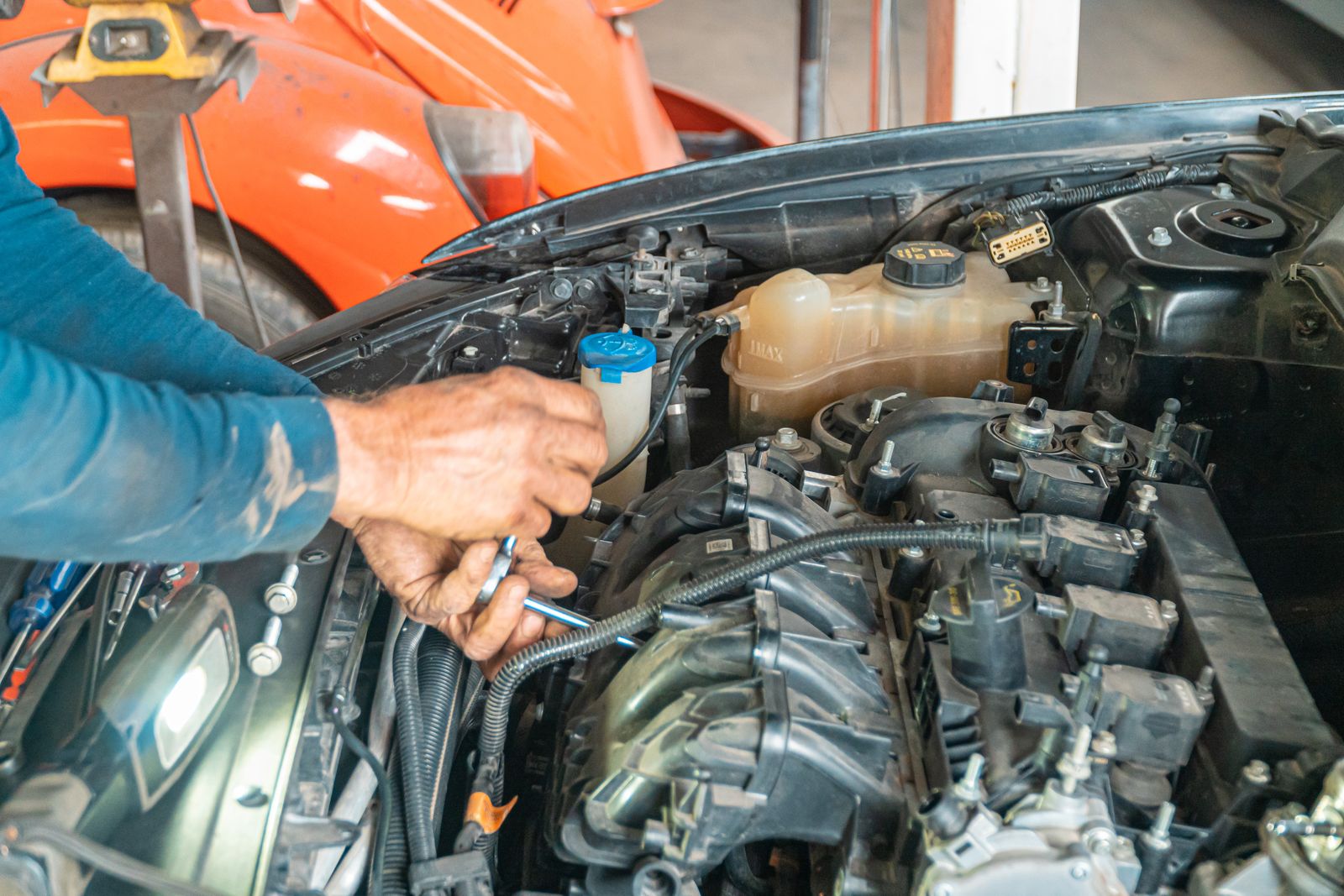
Scheduling service now gives a technician time to:
- Check coolant level and condition
- Inspect hoses, belts, the radiator, reservoir, and water pump
- Test the thermostat and engine warm-up performance
- Pressure-test the system for leaks
- Check heater core flow
- Look for air in the system
- Verify HVAC blend door operation
- Confirm the correct coolant specification
- Scan for related warning codes when needed
For El Segundo and Hermosa Beach drivers, coastal air and daily stop-and-go traffic can make routine inspections worthwhile even when the weather feels comfortable. Drivers in Riverbank may also experience larger temperature swings and hotter summer conditions, making cooling system health especially important year-round.
The goal is not to sell you a part you do not need. The goal is to find a developing problem while it is still manageable.
Do not mix coolant based on color alone
Coolant is not simply “green,” “orange,” or “pink.” Those colors do not reliably identify the chemistry or vehicle specification. Coolants may use different additive technologies, including IAT, OAT, HOAT, and Si-OAT formulations.
Mixing incompatible types can reduce corrosion protection and, in some cases, create deposits, sludge, or gel. Those contaminants can restrict the radiator, heater core, thermostat, and narrow engine passages. Gates explains the importance of correct cooling-system maintenance, including using the right coolant for the application.
If you are unsure what is already in the system, check the owner’s manual or have a technician identify the required specification. A small emergency top-off may not cause immediate symptoms, but using the wrong coolant as a routine solution can create expensive trouble later. When different formulas have been mixed significantly, a proper drain, flush, and refill may be the safest approach.
The cheap problem can become an expensive repair
A cooling system issue rarely improves by being ignored. A small leak can lower coolant until the engine overheats. A weak water pump can reduce circulation. A restricted radiator or heater core can force the system to work harder.
Continued overheating can damage:
- The radiator and cooling fans
- The water pump and thermostat
- Hoses, seals, and gaskets
- The cylinder head
- The head gasket
- The engine itself
A heater repair may be inconvenient. An overheated engine can become a major financial burden. That difference is why preventative cooling system service offers long-term value, particularly before extreme temperatures arrive.
How professional diagnostics find the problem early
A reliable diagnosis begins with symptoms and inspection, not assumptions. At Pittstop Auto Care, our technicians can combine visual checks, pressure testing, temperature measurements, coolant inspection, and computerized scanning to determine how the system is behaving.
For example, an infrared temperature check can help compare coolant temperatures entering and leaving the heater core. A pressure test can reveal a leak that is not visible during normal operation. A scan tool may identify thermostat performance issues, temperature sensor faults, or HVAC actuator codes.
This approach helps distinguish between low coolant, trapped air, a thermostat problem, a restricted heater core, and a blend door fault. It also helps you understand what needs attention now and what can safely wait.
If you are looking for a trusted mechanic in El Segundo, Pittstop Auto Care has been locally owned and family-operated since 2009. Our team is certified through organizations including ASE, AAA, ASA, TechNet, and NAPA AutoCare, and we focus on honest recommendations, quality parts and fluids, and efficient turnaround times.
Get your cooling system ready before the next temperature swing
A heater blowing cold air is more than a comfort issue. It may be your vehicle’s way of signaling low coolant, restricted flow, a thermostat fault, or another cooling system concern.
Do not wait for a hot afternoon, a rising temperature gauge, or an engine warning to make the appointment. Schedule a cooling system inspection with Pittstop Auto Care in El Segundo, or contact us if you drive in Hermosa Beach or Riverbank. We will test the system, explain what we find, and help you keep your vehicle safe and road-ready through every season.