
We’ve all been there. You’re cruising down Sepulveda Boulevard, maybe heading toward the beach or grabbing a coffee before work, when suddenly a little amber glow catches your eye. It’s the dreaded check engine light.
Your heart sinks just a little. You start wondering: Is my car about to break down? How much is this going to cost? Can I just ignore it until my next paycheck?
At Pittstop Auto Care, we see that look of worry on our neighbors’ faces every day. But here’s the good news: that light isn’t a death sentence for your car. It’s actually your vehicle’s way of trying to save itself (and your wallet) from a much bigger headache down the road. Think of it as a “check-up” light rather than a “panic” light.
Living in El Segundo and the South Bay means our cars deal with unique challenges: from stop-and-go traffic on the 405 to the salty air near the coast. Understanding why that light is on is the first step to keeping your ride smooth and your bank account happy.
The Top 10 Reasons Your Check Engine Light Is Flashing (or Glowing)
Your car’s onboard computer is constantly monitoring dozens of sensors. When something isn’t quite right, it triggers a code. While there are hundreds of possible codes, these ten are the most common culprits we see during car diagnostics in El Segundo.
1. The Loose or Damaged Gas Cap
Believe it or not, this is one of the most frequent reasons for a check engine light. Your car’s fuel system is a sealed environment. If the gas cap is loose, cracked, or simply missing, it disrupts the pressure in the system. The computer detects a leak and throws the light.
- The Fix: Tighten it! If it’s cracked, a new one costs just a few dollars. It’s the easiest win in the automotive world.
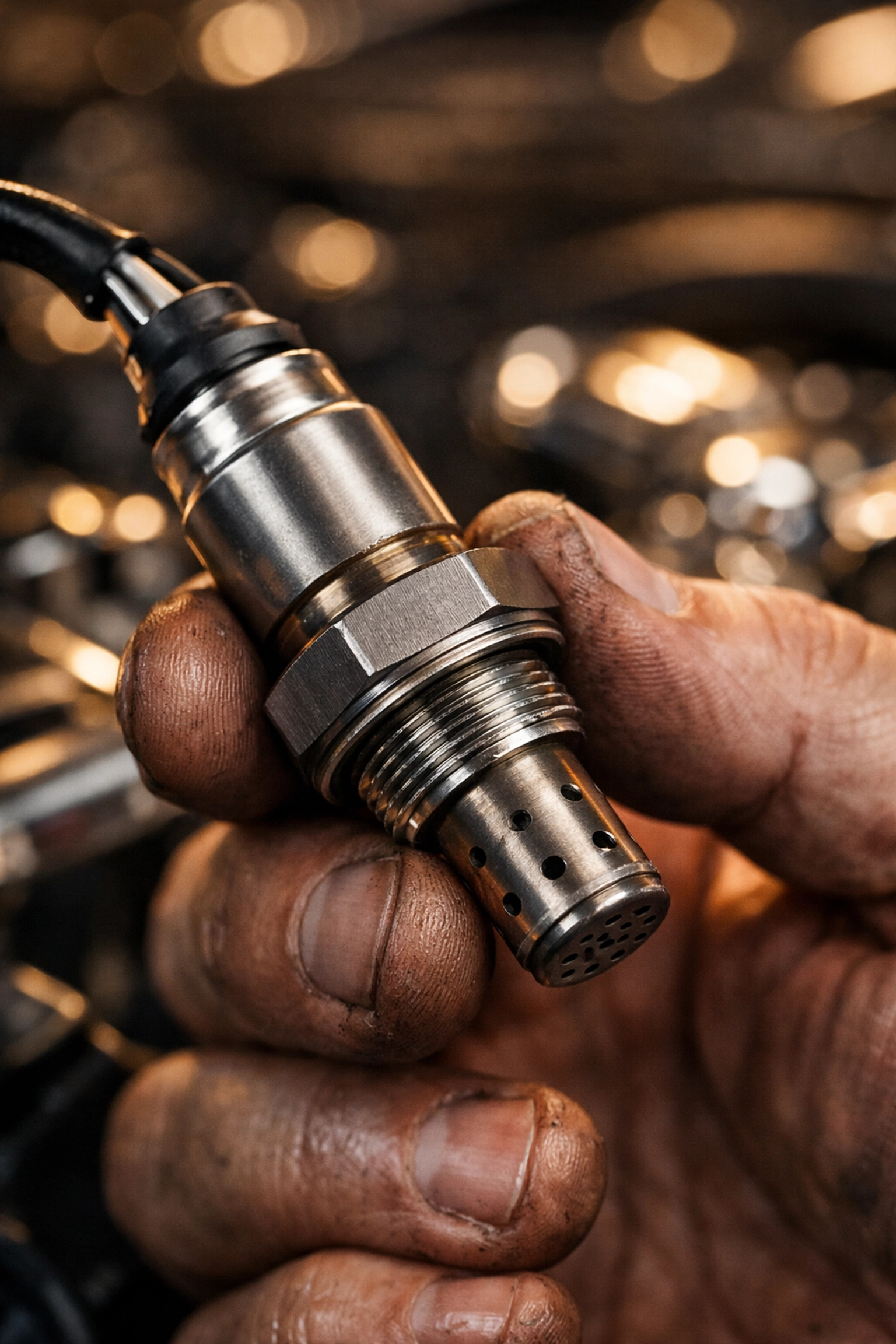
2. Failing Oxygen (O2) Sensor
The O2 sensor is like your engine’s “nose.” It monitors how much unburned oxygen is in the exhaust. If it’s not working right, your car doesn’t know how much fuel to burn, which can tank your gas mileage. If you ignore this, you might eventually ruin your catalytic converter (which is way more expensive).
- The Benefit: Replacing a sensor is a minor repair compared to the alternative.
3. Worn-Out Spark Plugs and Wires
Spark plugs are the “heartbeat” of your combustion process. They provide the spark that ignites the air-fuel mixture. Over time, they get fouled or worn down. If they fail, your engine will misfire. You’ll feel a little jolt when you accelerate, and that light will definitely let you know something is wrong.
4. Catalytic Converter Issues
This part is responsible for turning harmful carbon monoxide into less harmful emissions. Usually, a catalytic converter doesn’t fail on its own: it fails because a smaller problem (like those spark plugs we just mentioned) went ignored for too long.
- Local Tip: With California’s strict emissions laws, keeping your exhaust system in top shape is essential for passing your next smog check.
5. Mass Airflow Sensor (MAF) Problems
The MAF sensor measures how much air is entering the engine to determine how much fuel is needed. In our coastal El Segundo environment, dust and salt air can occasionally build up on this sensitive part. When it’s dirty, your car might stall or hesitate.
6. A “Bad” Tank of Gas
It happens to the best of us. Sometimes you hit a station with lower-quality fuel or a bit of moisture in their underground tanks. If your car starts acting up right after a fill-up, this could be the culprit. Often, running the tank low and refilling with high-quality gas from a reputable station solves the problem.
7. Faulty Ignition Coils
If the spark plugs are the “heartbeat,” the coils are the “battery” that powers that beat. They deliver the high-voltage electricity needed for the spark. In modern vehicles, these are common failure points, but luckily, they are relatively straightforward for a pro to swap out.
8. Engine Overheating or Thermostat Failure
The thermostat is a small valve that manages the flow of coolant. If it gets stuck, your engine can’t regulate its temperature. If you see the check engine light along with your temperature gauge creeping up, pull over immediately. Heat is the number one enemy of engine longevity.
9. Low Oil Pressure
Oil is the “lifeblood” of your machine. It lubricates moving parts and helps dissipate heat. If your oil level is dangerously low or the pump is failing, the check engine light (or the oil light) will trigger to prevent the engine from seizing. Regular oil changes are the best way to prevent this.
10. EVAP System Leaks
The Evaporative Emission Control (EVAP) system traps gasoline vapors before they escape into the atmosphere. A leak in a hose or a faulty valve can trigger the light. It won’t usually stop your car from driving, but it will prevent you from passing a smog test and hurts the environment.

Why Car Diagnostics in El Segundo Actually Save You Money
We know what some people think: “If I take it to a shop, they’re just going to find ten more things wrong and charge me a fortune.”
At Pittstop Auto Care, we take the opposite approach. We believe in transparency. When you come in for a check engine light diagnostic, you aren’t just paying for us to “read a code.” You’re paying for expertise that prevents the “parts cannon” approach.
What is the “Parts Cannon”?
The parts cannon is what happens when someone (or a less experienced shop) keeps replacing parts hoping to fix the problem.
- The Code says: “Lean fuel mixture.”
- The Parts Cannon says: “Replace the O2 sensor! Replace the fuel pump! Replace the injectors!”
- The Reality: It was just a $10 vacuum hose that had a tiny crack.
By using professional car diagnostics in El Segundo, we pinpoint the exact failure. This saves you from buying parts you don’t need and ensures the problem is fixed the first time.
Preventing the “Snowball Effect”
Mechanical issues are like a snowball rolling down a hill: they only get bigger and more expensive as they go.
- A $50 spark plug issue ignored today becomes a $1,500 catalytic converter replacement next month.
- A small coolant leak becomes a warped engine head that costs thousands.
Investing in a diagnostic early is like buying insurance for your engine’s future. It gives you peace of mind knowing exactly what’s happening under the hood.

The Pittstop Auto Care Difference
We’ve been serving this community for years, and we know that your vehicle is more than just a machine: it’s how you get to work, how you get your kids to school, and your ticket to weekend adventures. Whether you’re driving a classic gas-guzzler or a modern EV, we have the tools and the software updates to handle it.
When that light comes on, don’t ignore it, and don’t let it ruin your day. Bring it by our El Segundo location. We’ll hook it up to our advanced diagnostic equipment, explain what’s going on in plain English, and help you decide the best path forward.
Ready to Clear That Light?
Your car is trying to tell you something: are you listening? Whether it’s a simple gas cap fix or something that needs a bit more “under-the-hood” surgery, the team at Pittstop Auto Care is here to help.
Don’t let a small light lead to a big bill. Contact us today to schedule your diagnostic appointment. Let’s get you back on the road with total confidence and a clear dashboard!